

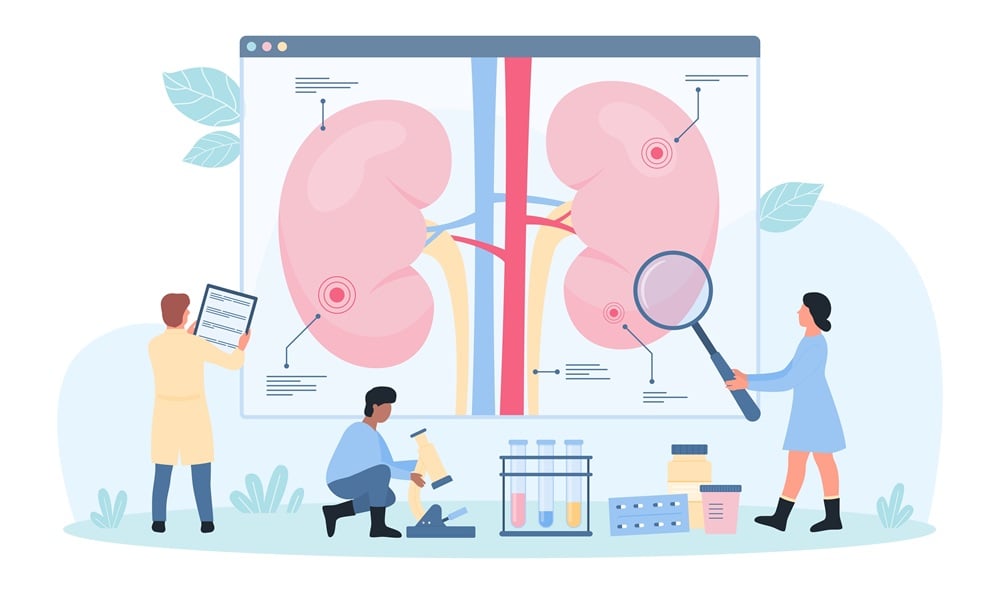
Chronic kidney disease (CKD) is a long-term condition where the kidneys gradually lose their ability to filter waste and extra fluid from the blood. If left untreated, CKD can lead to serious health problems, including kidney failure.
High uric acid, also known as hyperuricaemia (HUA), is a condition where there is too much uric acid in the blood. This happens when the body produces too much uric acid or cannot remove enough of it. High uric acid levels may speed up the progression of CKD and increase the risk of cardiovascular disease.
Despite its high prevalence, CKD often goes undetected because it can develop without obvious symptoms. Concerningly, fewer than 1 in 10 people (7.4%) living with CKD are aware they have the condition.
Kidney failure is the most severe stage of CKD. At this stage, the kidneys can no longer perform their essential functions, and people often require a kidney transplant or dialysis. In 2021, there were approximately 6,500 new cases of kidney failure in Australia. Of these, around half (50%) were receiving kidney transplant or dialysis.
Fortunately, early detection and intervention can slow the progression of CKD and reduce the significant burden of advanced kidney disease.
Chronic kidney disease (CKD) is influenced by several risk factors, including:
Because CKD often develops silently with few or no symptoms in its early stages, delayed diagnosis can increase the risk of disease progression, leading to kidney failure and the need for dialysis or kidney transplantation.
Early detection is one of the most important factors in the successful management of CKD. Regular screening and monitoring allow healthcare professionals to detect kidney damage early, slow disease progression, and reduce the risk of complications.
This blood test measures how effectively the kidneys filter waste from the blood. It is one of the main tests used to diagnose CKD, determine the stage of the disease, and monitor changes in kidney function over time. A lower eGFR indicates reduced kidney function.
This test is performed on a 24-hour urine sample and measures the amount of albumin (a type of protein) in the urine. Healthy kidneys prevent albumin from passing into the urine, so high levels suggest kidney damage. Persistent high albumin level is an important marker of CKD, even when an eGFR test result is within the normal range.
This test measures the level of uric acid in the blood. High uric acid levels are associated with CKD progression and may also increase the risk of cardiovascular disease.
Depending on the individual’s health and underlying conditions, healthcare providers may recommend additional tests, including:
While CKD cannot always be reversed, early diagnosis and appropriate management can significantly slow its progression.
Certain medications can help slow the progression of CKD, with some studies suggesting that appropriate treatment may delay disease progression by 15 years or more.
Treatment of chronic kidney disease typically focuses on controlling underlying conditions such as diabetes and cardiovascular disease, adopting a healthy lifestyle with a healthy diet and physical activity, and taking prescribed medications to protect kidney function.
This approach includes the use of four core medications:
In addition to the currently approved medications, several potential new therapies for CKD are being studied, including treatments specifically for people with high uric acid levels (hyperuricaemia). Some of these investigational treatments aim to lower uric acid levels by reducing the reabsorption of uric acid in the kidneys.
Although these treatments have shown promise in laboratory research, they are still being evaluated in clinical trials to determine their safety and effectiveness before they can become widely available.
Clinical trials play an important role in CKD research by helping us evaluate if newly developed treatments are safe and effective. Participation in a clinical trial is entirely voluntary, and not every study is suitable for every person.
If you are interested in learning more about clinical trials, speak with your kidney specialist or healthcare team. They can discuss whether there are any studies that may be appropriate for your individual circumstances and help you understand the potential benefits, risks, and alternatives before you make any decision.
To view our current studies or register your interest in future studies, click here or call us on (02) 4985 1860 to speak with a friendly team member.
View our current studies or register your interest for future trials: